Pokemon Perler Beads
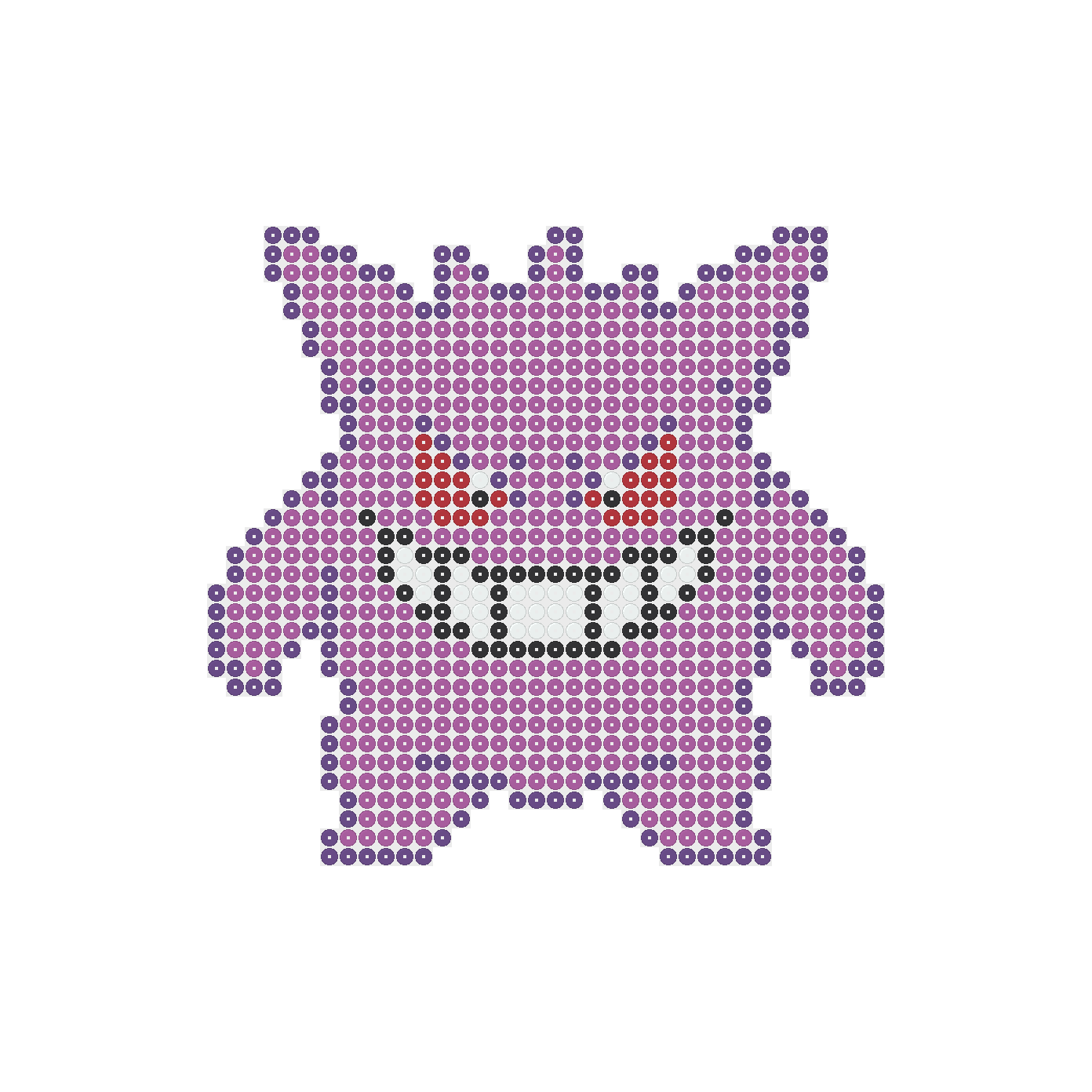
Use these Pokemon Perler beads patterns to make Pikachu, Eevee, Squirtle, Gengar, or a Poke Ball with 5mm beads. Compare 11 patterns, check the colors and quantities, and choose a design that fits your boards. Open any pattern from its preview image to change colors or adjust individual beads. You can then download a PNG or PDF to follow while placing your beads. Start by comparing the actual bead totals, not just the pattern dimensions.
Open Designer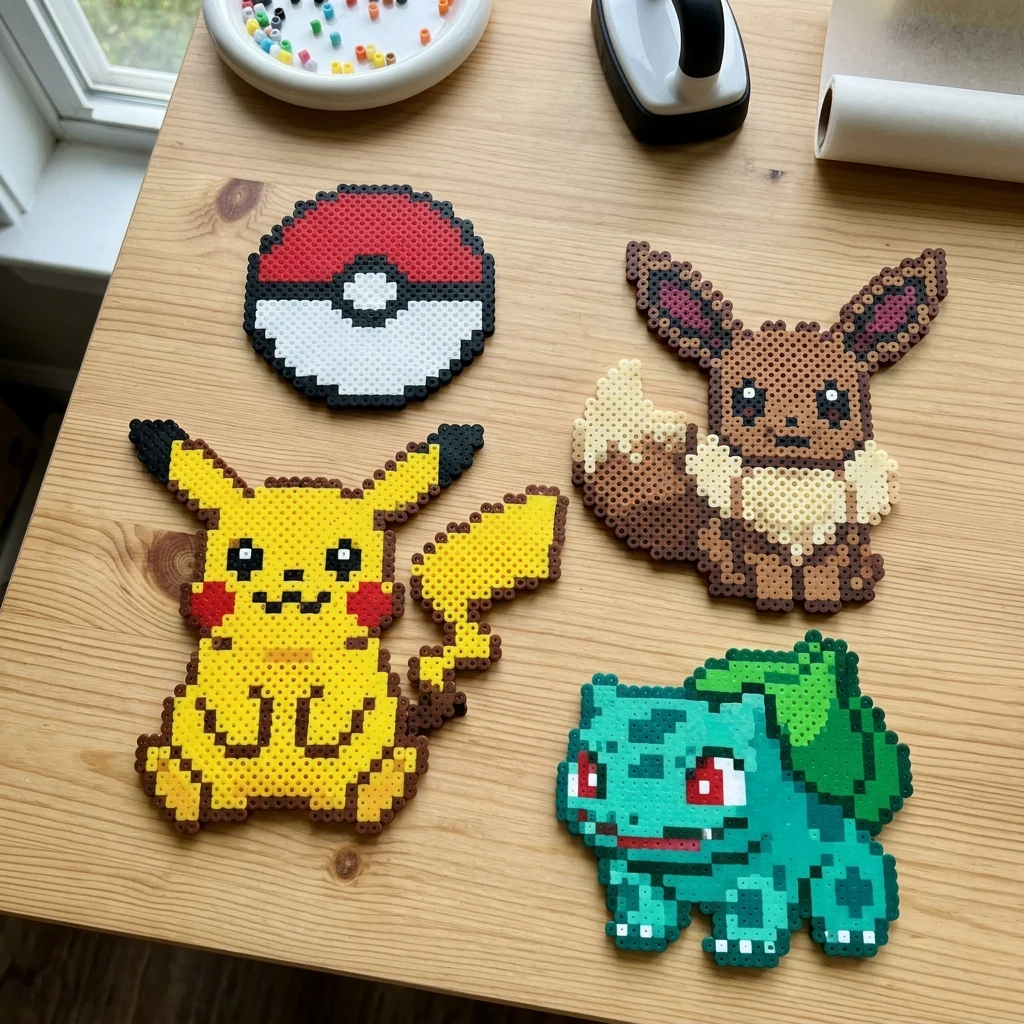
Compare before you choose
11
Patterns to choose from
322–1574
Beads per pattern
1–4
Boards per pattern
Choose a bead pattern
11 patterns
Which Pokemon Pattern Should You Choose?
Compare designs
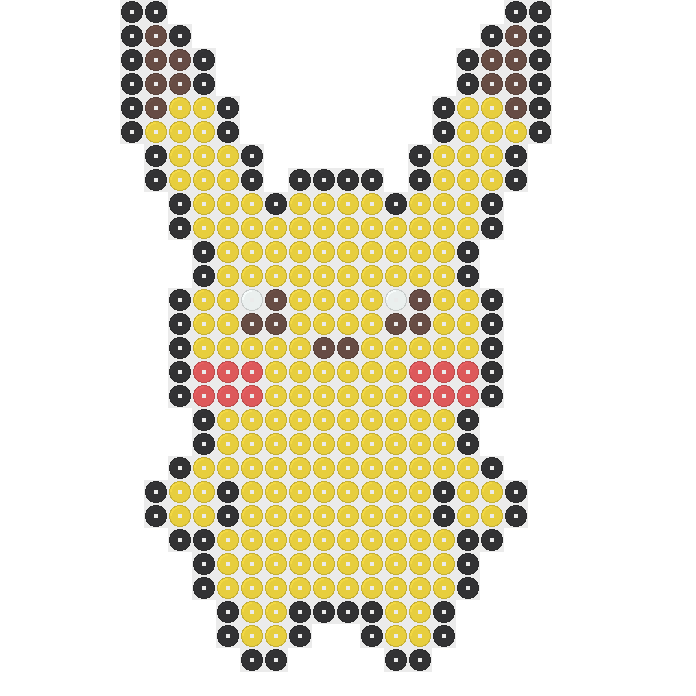
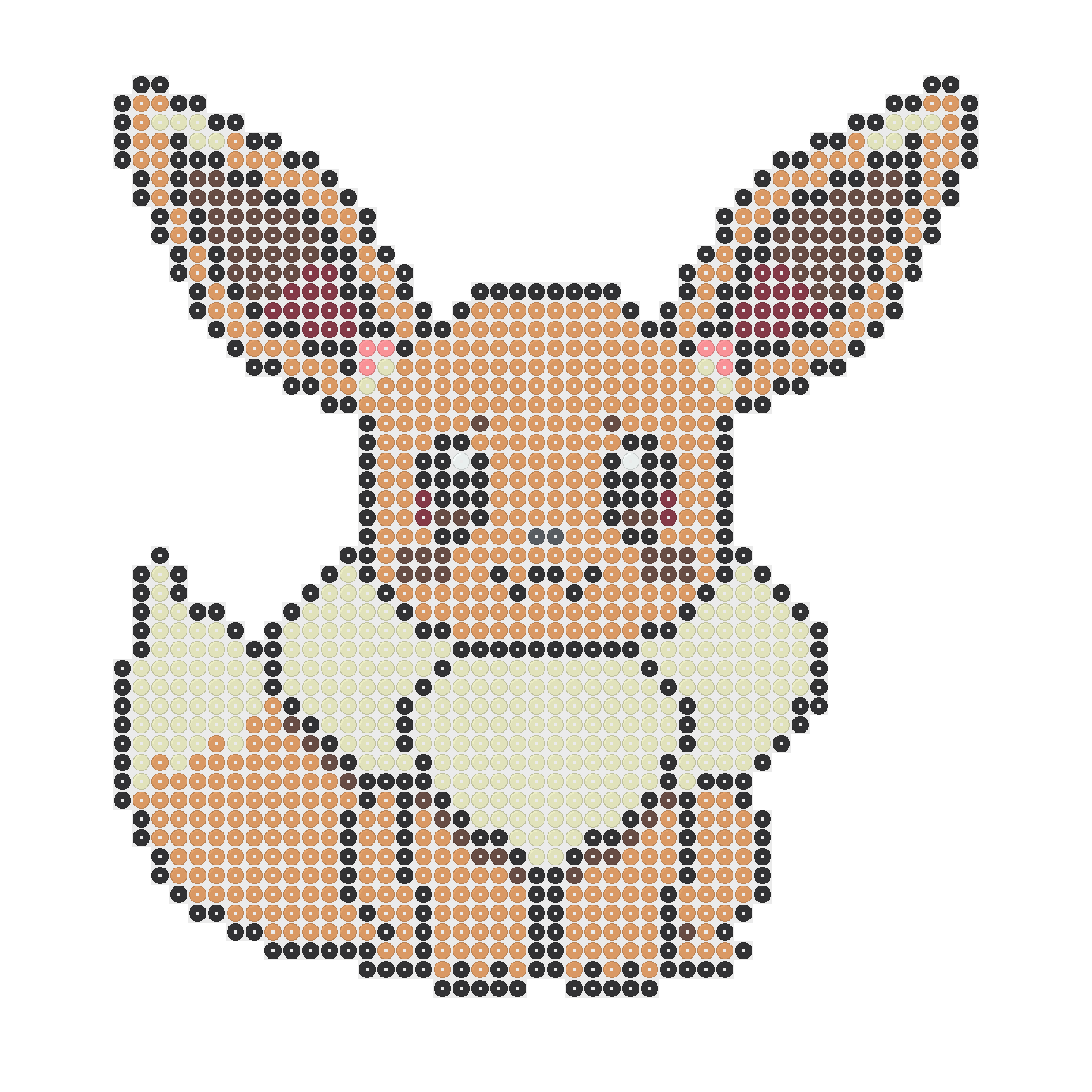
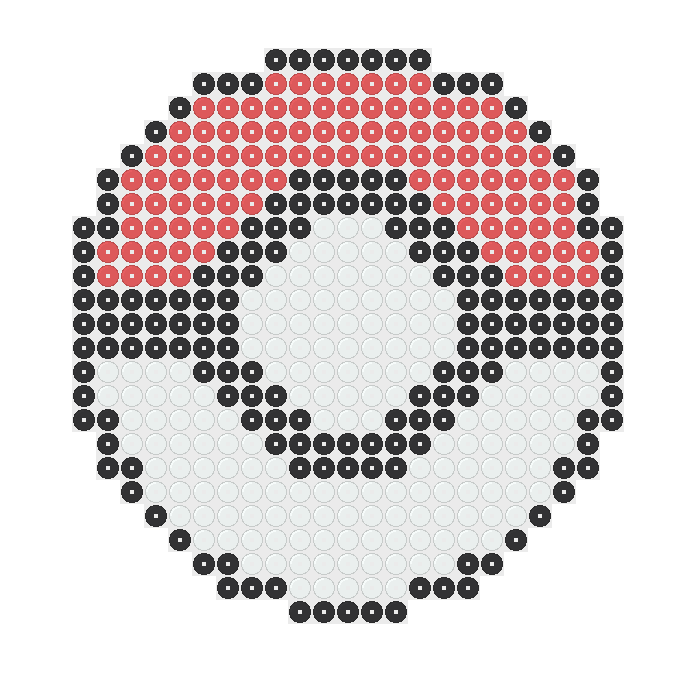
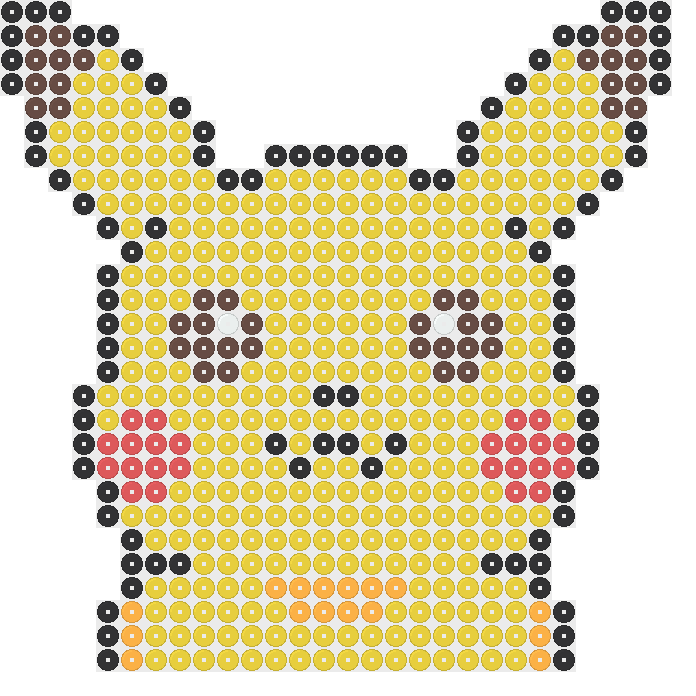
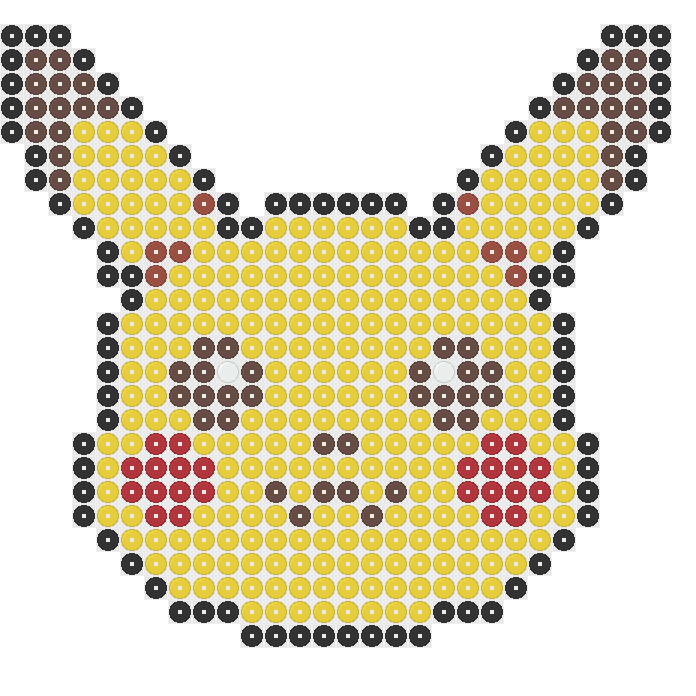
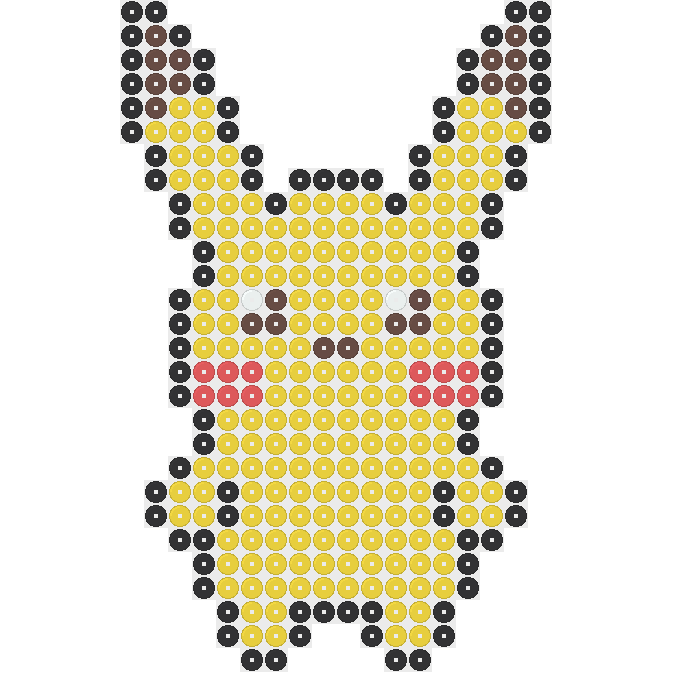
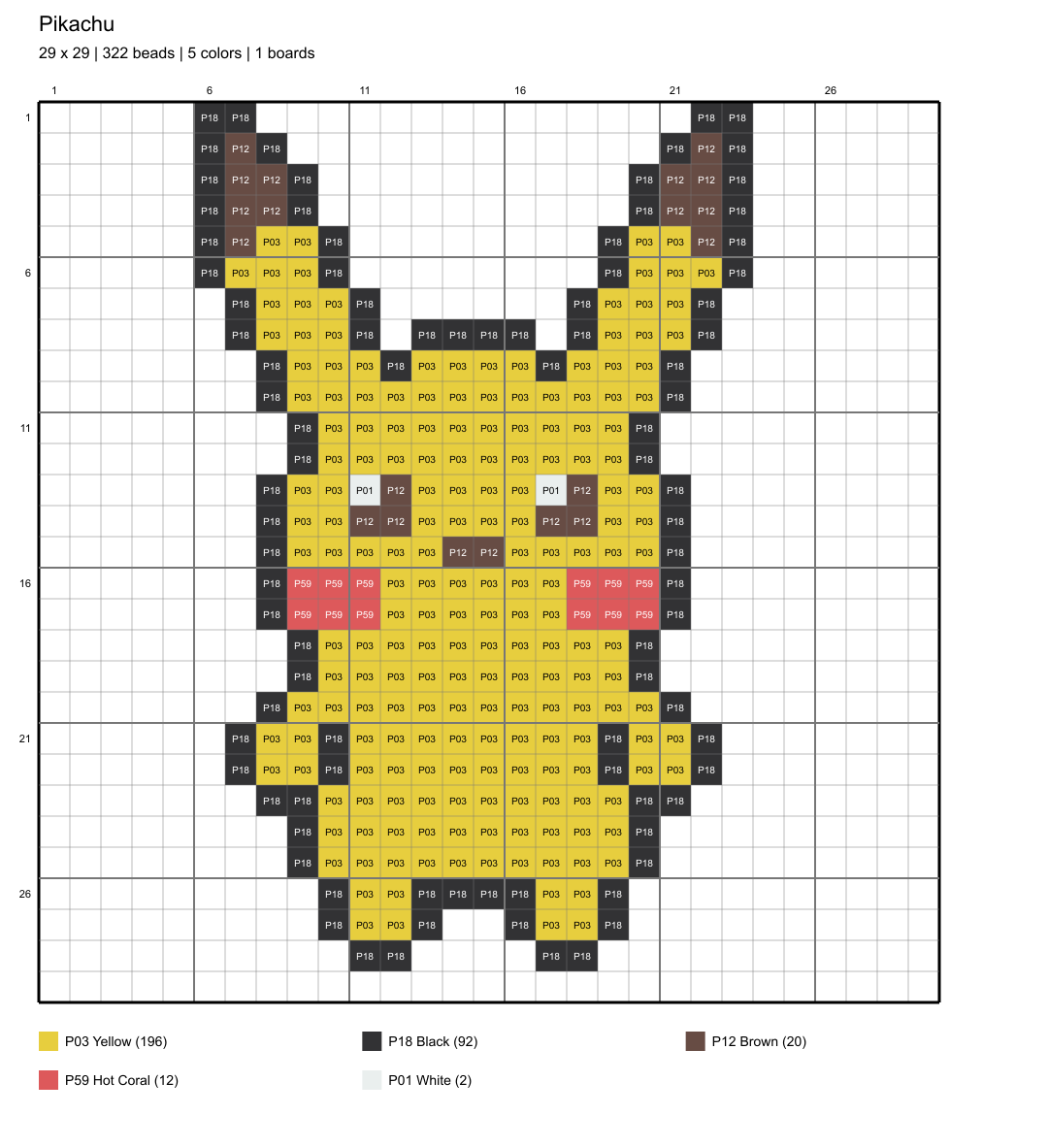
Choose Pokemon Perler beads by comparing the character, bead total, and number of colors before gathering supplies. The 29×29 Pikachu pattern uses 322 beads in five colors. The 29×29 Poke Ball uses 442 beads in three colors, so it needs fewer separate color groups.
Check requirements
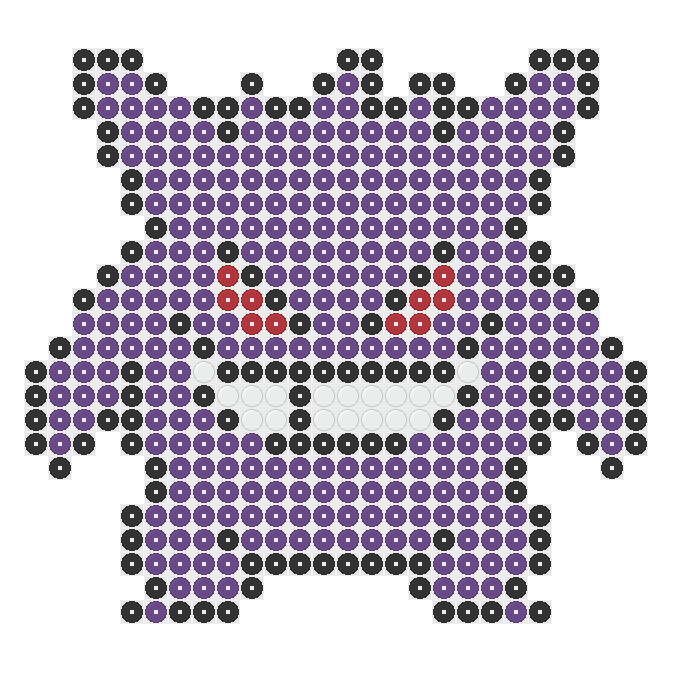
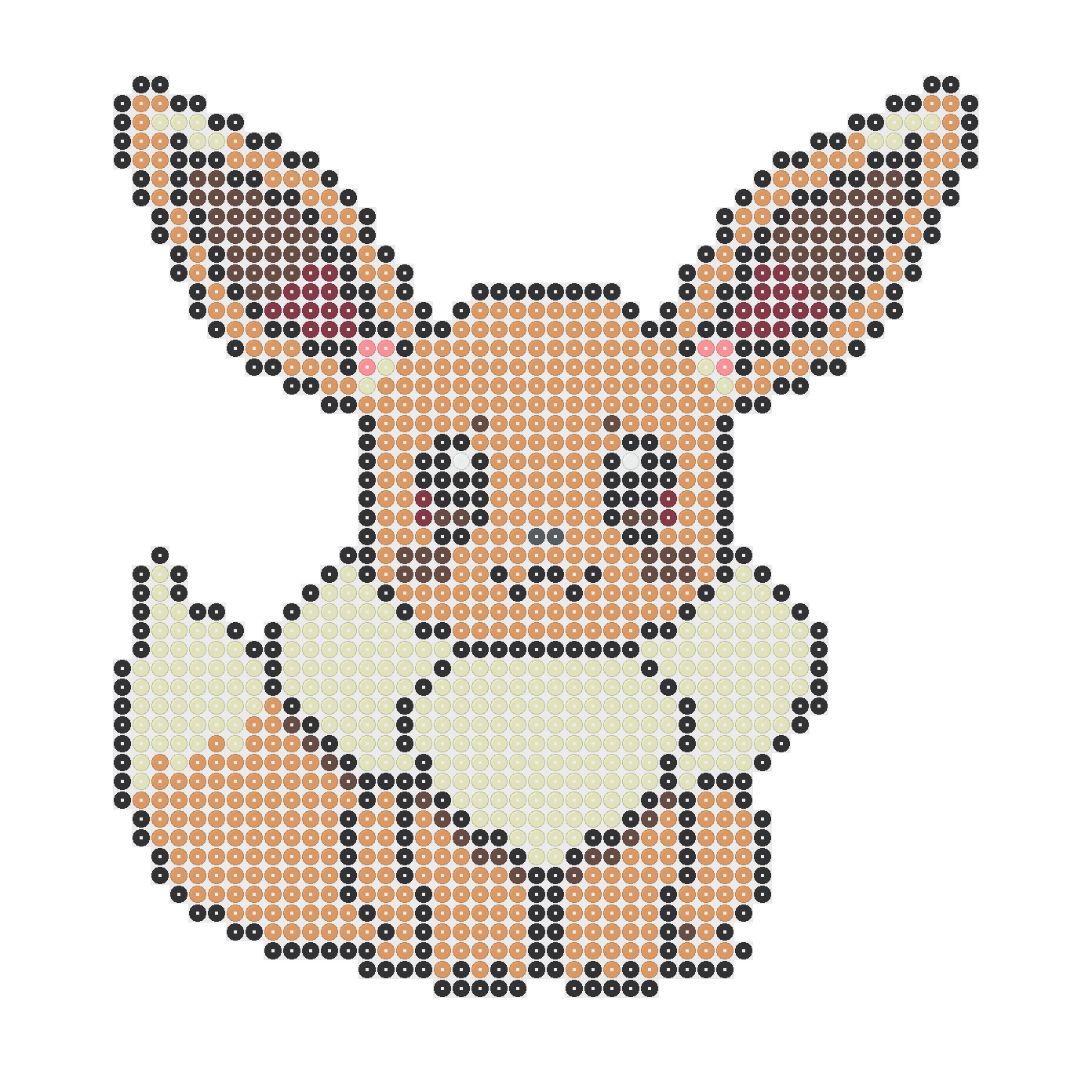
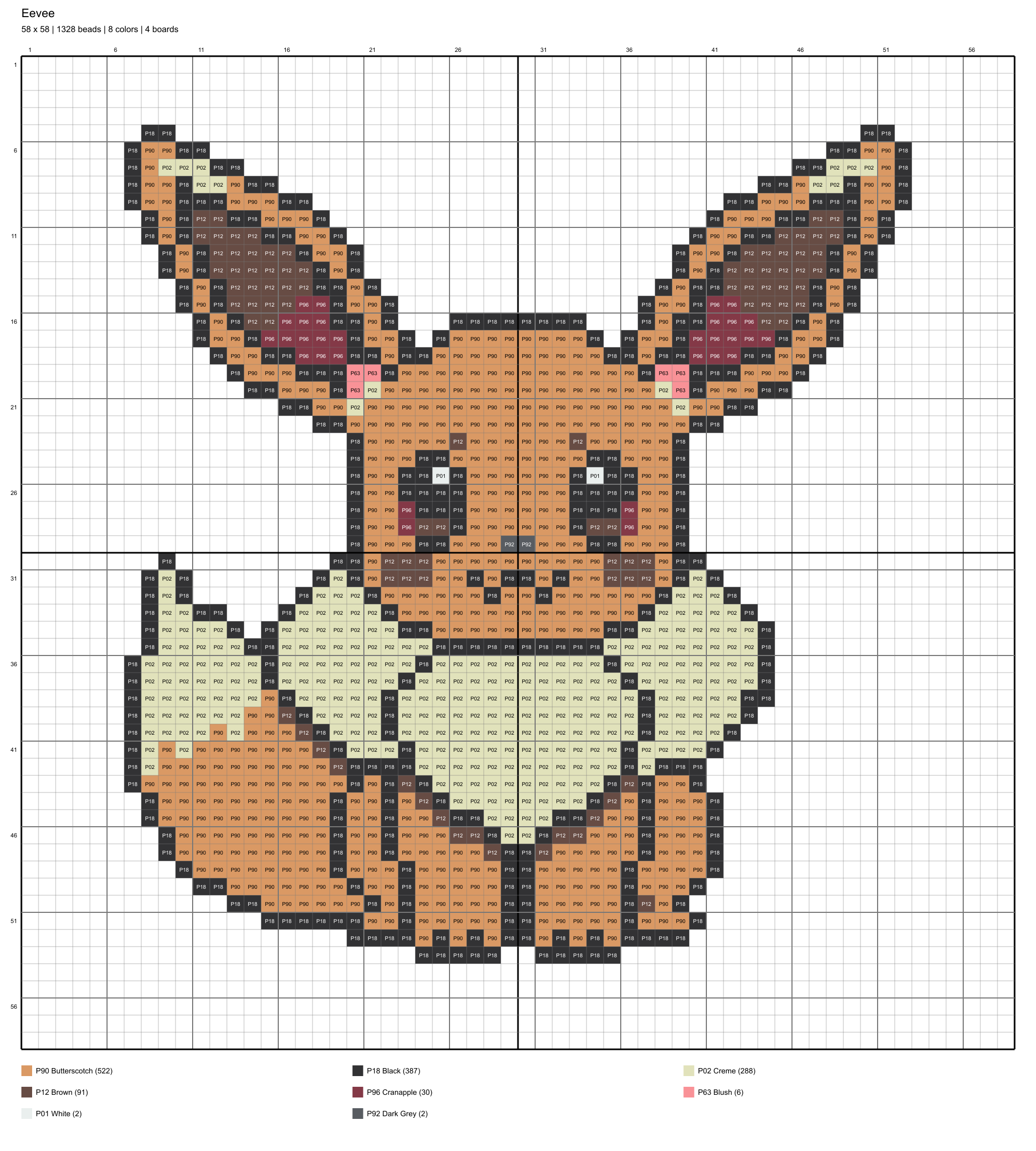
Gengar offers another useful comparison. Its 29×29 pattern uses 452 beads in four colors, while its 58×58 pattern uses 857 beads in five colors. Eevee's 58×58 pattern uses 1,328 beads in eight colors. These differences help you choose what to make with your available supplies.
Choose your pattern
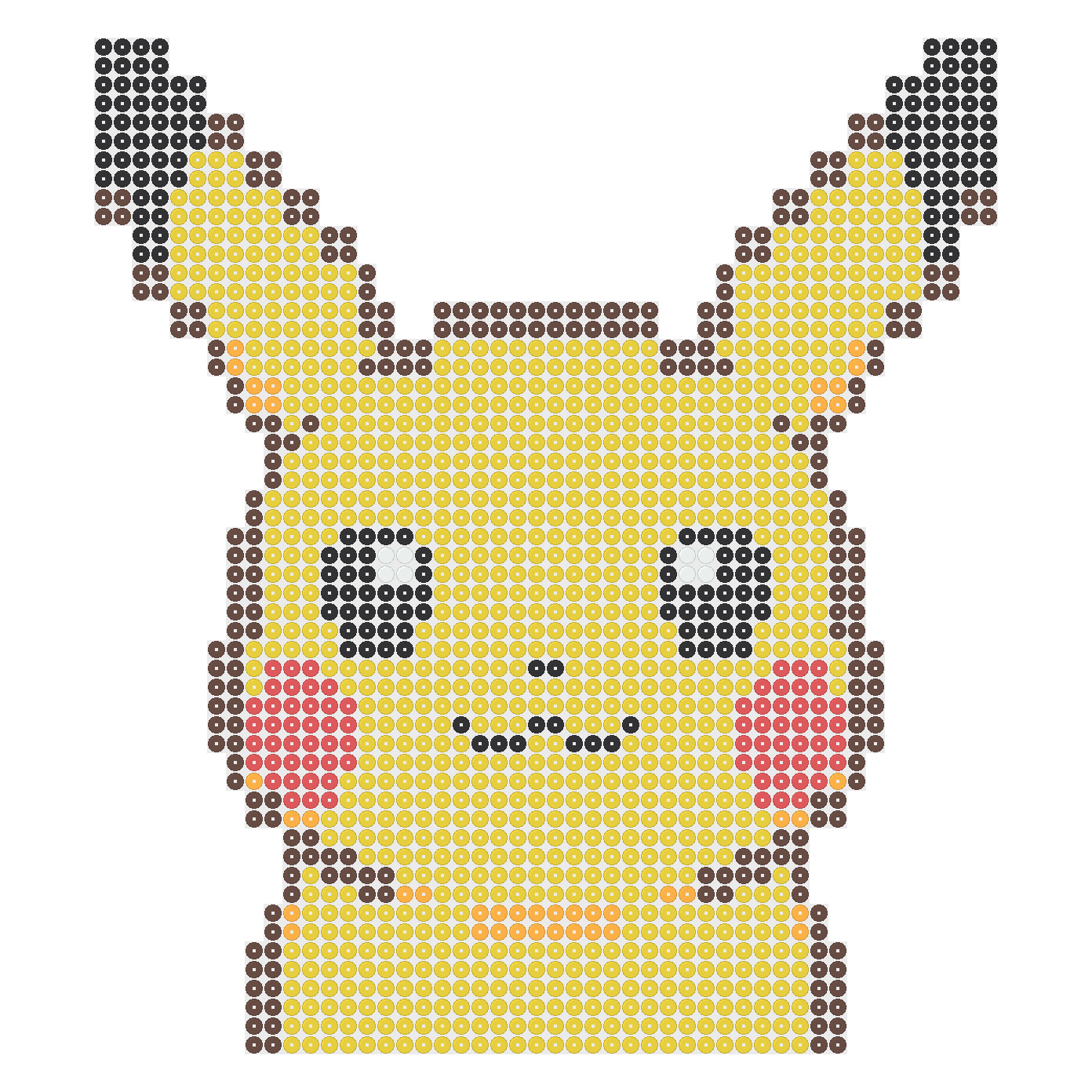
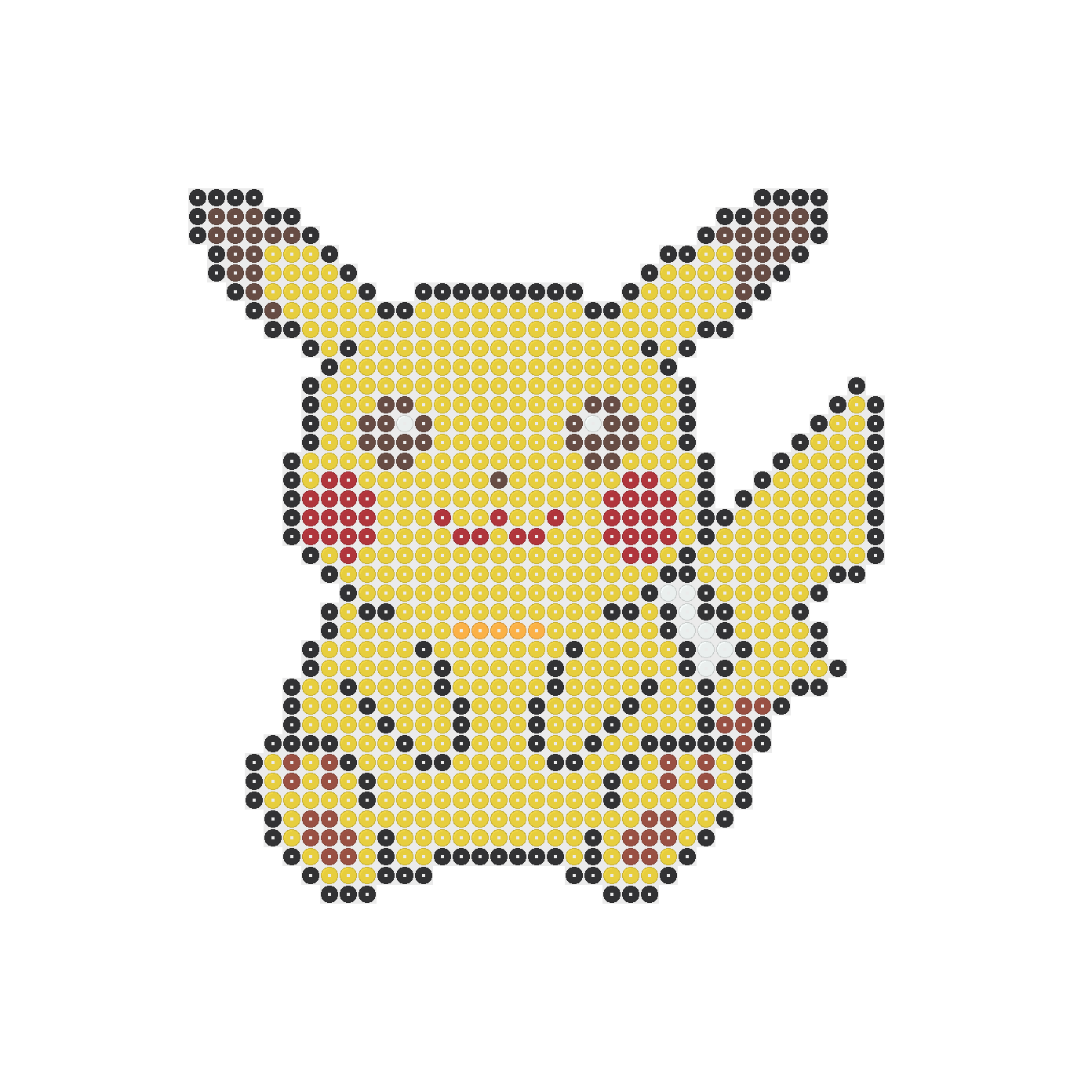
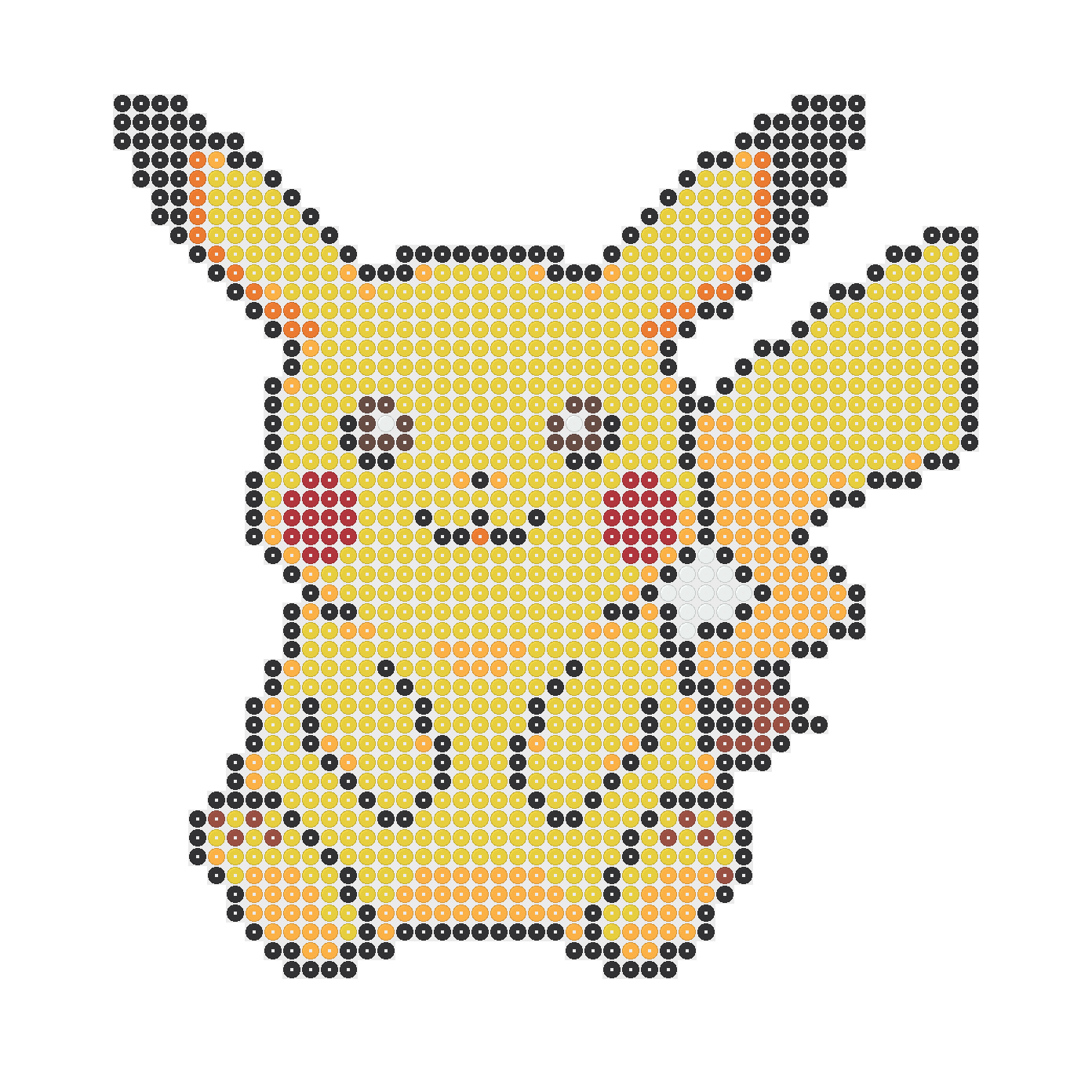
The Pokemon Perler beads collection includes six Pikachu patterns, so check the exact preview rather than choosing by character name alone. For example, Pikachu Mini uses 446 beads, while the standard 29×29 Pikachu uses 322. Similar names do not mean identical quantities or color requirements.
How Many Beads and Which Colors Do You Need?
Sort your colors
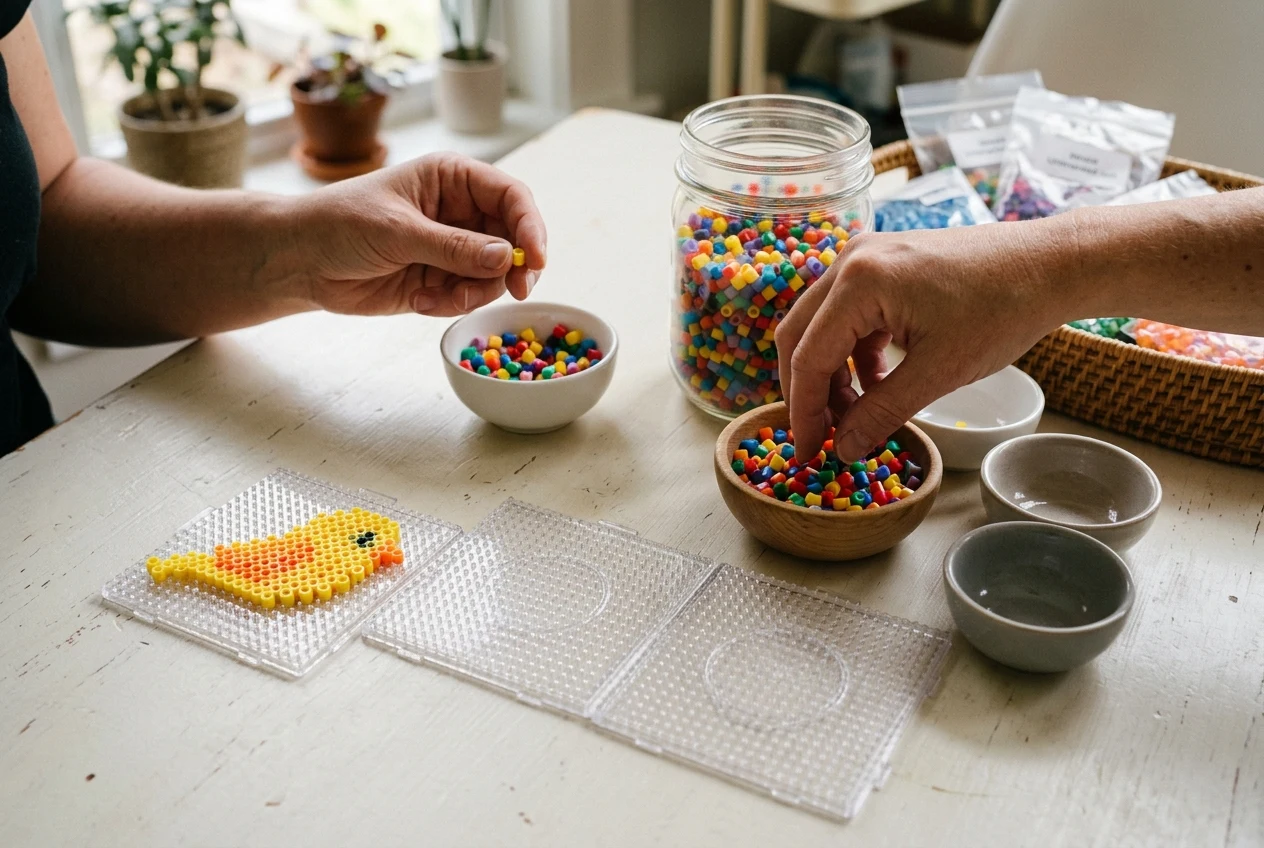
Sort your Pokemon Perler beads supplies using the quantities for the exact pattern you chose. The 322-bead Pikachu needs 196 Yellow, 92 Black, 20 Brown, 12 Hot Coral, and two White beads. Put each color in a separate container before you begin following the chart.
Check quantities
For the 29×29 Poke Ball, gather 168 Black, 106 Hot Coral, and 168 White beads. Its total is 442 beads, but buying only that total without checking colors could leave you short. Compare each required quantity with the beads you already have at home.
Gather supplies
Larger Pokemon Perler beads projects can need a very different mix. Eevee needs 522 Butterscotch, 387 Black, and 288 Creme beads, plus five other colors. Check the complete pattern before shopping, especially for colors used in small amounts that might be missing from your collection.
Do You Need One Board or Four?
Check dimensions
Check the pattern space before setting out your Pokemon Perler beads boards. A 29×29 pattern uses one 29×29 board. A 58×58 pattern uses four 29×29 boards arranged as a square. Leave room for the full arrangement, even when parts of the chart are empty.
Plan board space
Board capacity is different from the number of beads you need. One 29×29 board has 841 positions, and four have 3,364 positions. Those numbers describe a completely filled space. Most character patterns leave positions empty, so use the selected pattern's total when gathering your beads.
Compare bead totals
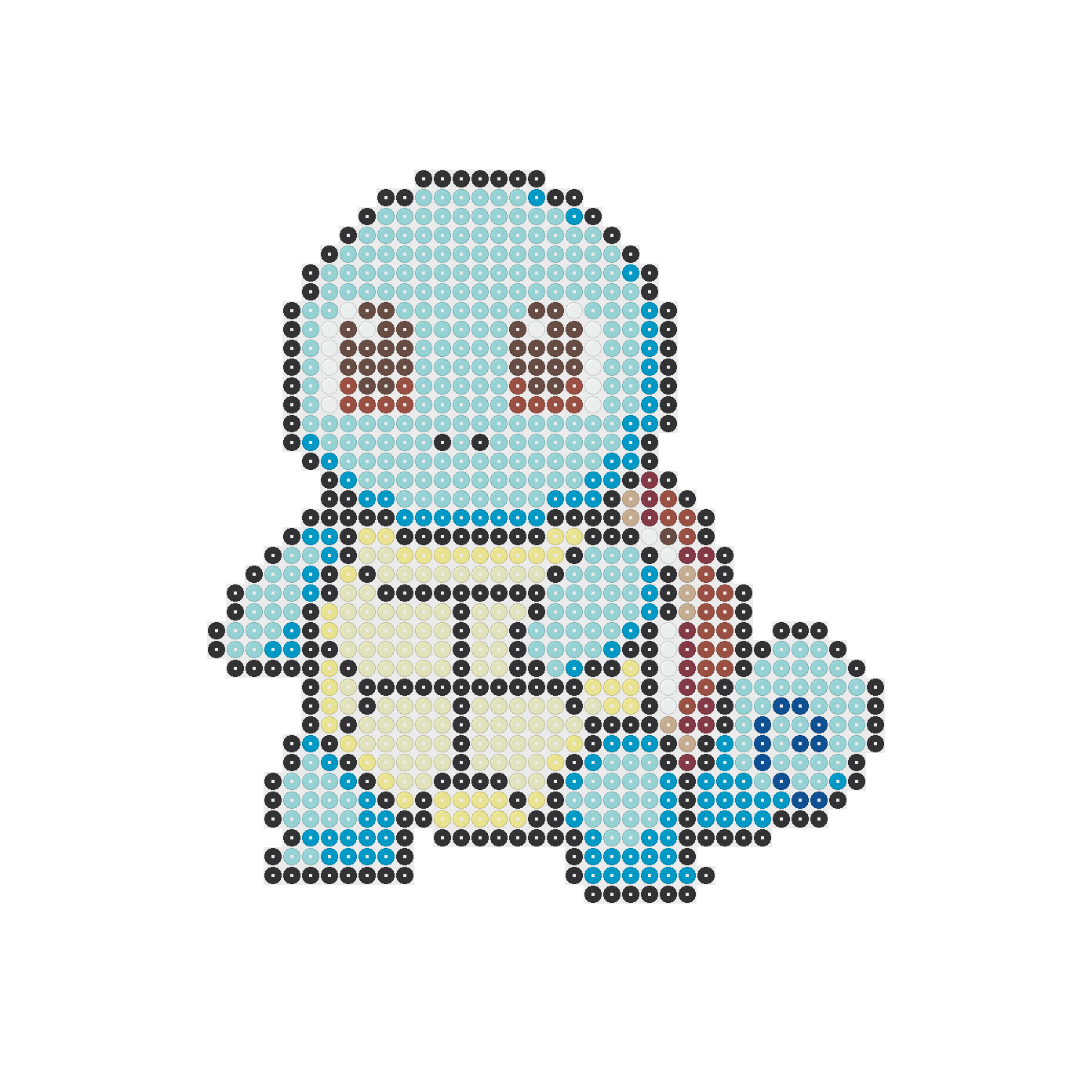
Pokemon Perler beads patterns with the same dimensions can require different bead totals. The 58×58 Squirtle uses 889 beads, while the 58×58 Eevee uses 1,328. Both require four boards. Compare dimensions for board planning and bead totals for supplies as two separate checks.
How to Follow the Pattern Row by Row
Locate a row
Place Pokemon Perler beads by following the chart rather than copying a scene photo. Start with a row you can clearly locate, and count both filled and empty positions. Empty spaces matter because they keep each group of beads in the correct place on the board.
Check each row
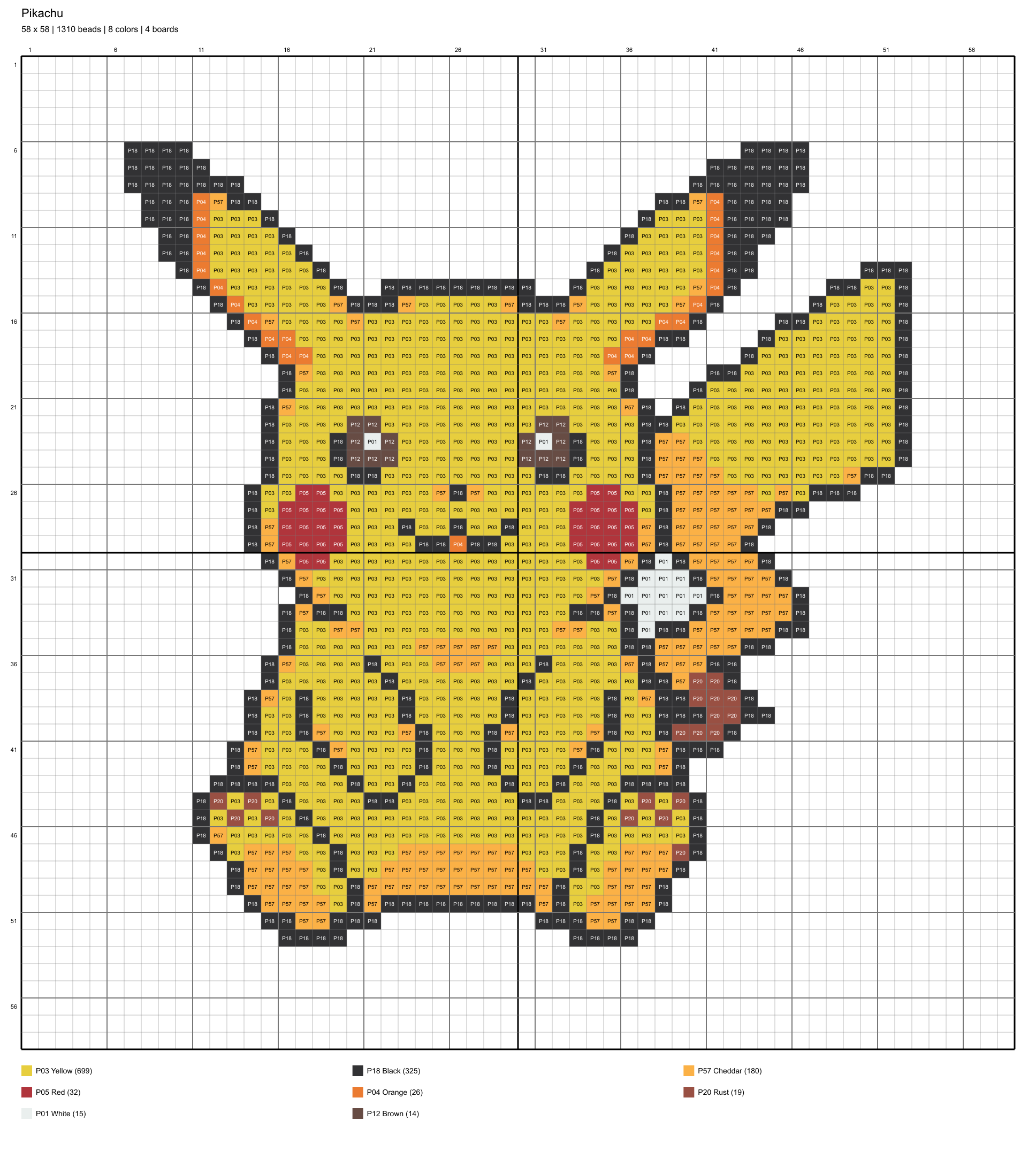
Work across one row of your Pokemon Perler beads design, then compare it with the chart before starting the next. Check where each color begins and ends. If your place is hard to remember, keep a written note of the last completed row beside your pattern so you can return confidently.
Review the chart
For Pokemon Perler beads on four boards, pay attention where a row crosses from one board to another. Keep counting across that join rather than restarting the pattern. Before heating, compare the whole arrangement with the chart and correct missing beads or misplaced colors.
Change Colors and Download Your Pattern
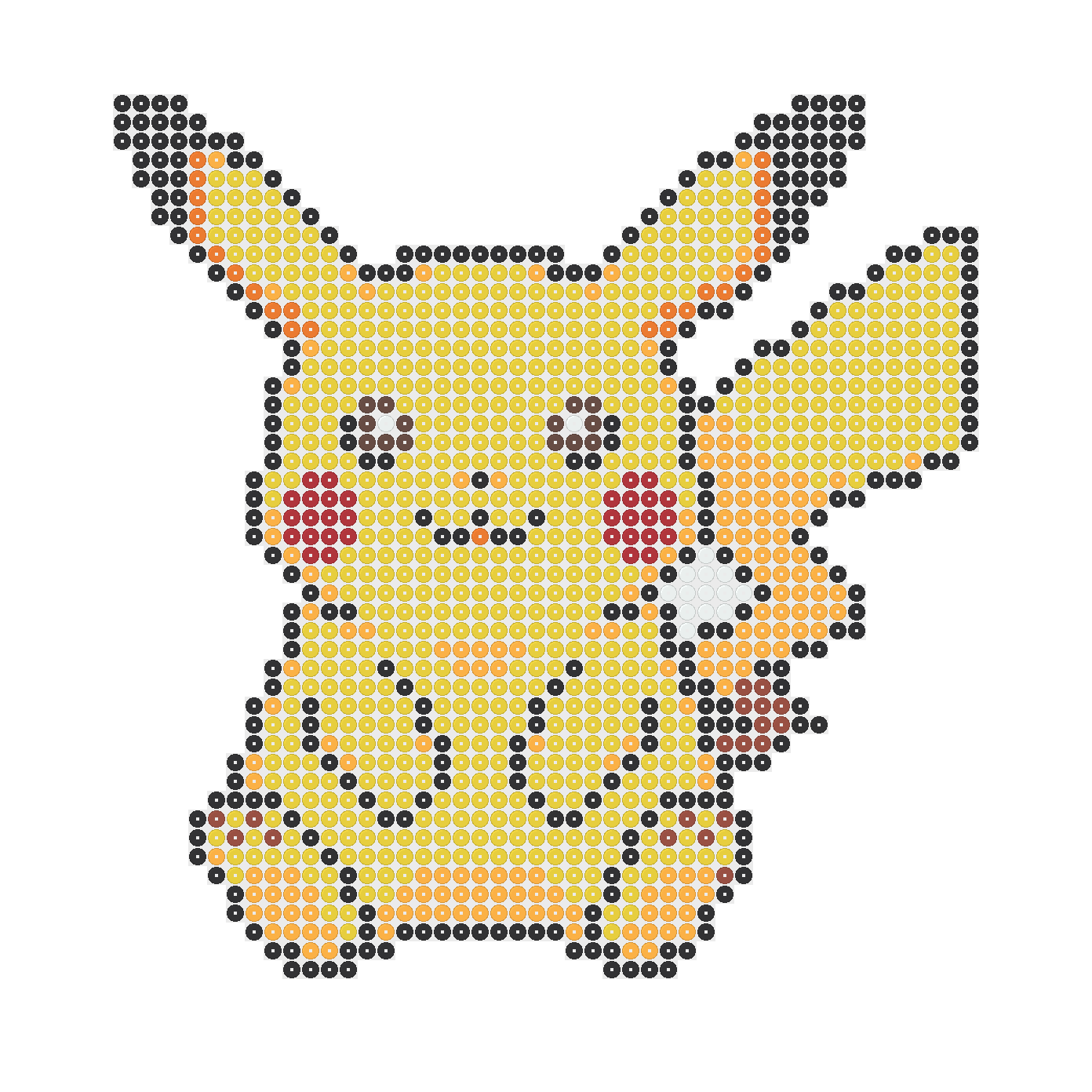
Open the exact Pokemon Perler beads pattern by selecting its preview image or the Open in Designer button. You do not need an account. Start with the chosen design so you can inspect its bead positions before deciding whether you want to make any changes.
You can draw beads, erase positions, and change bead colors in the Designer. Undo and redo let you step back or restore a change. Watch the updated totals as you work, since adding or removing beads changes how many you need for the finished arrangement.
Download your edited Pokemon Perler beads pattern as a PNG or PDF when you are happy with it. Review the downloaded picture before placing beads. If you print it, check that the whole chart is visible and use its rows as a reference for your board.
Compare bead preview and placement chart
Choose Your Next Bead Project
Plan another project
After choosing Pokemon Perler beads, plan your next project around the supplies left over. Another Pikachu pattern may suit your remaining Yellow beads, but compare its exact requirements first. Six Pikachu choices give you alternatives without assuming that every version uses the same colors.
Browse collections
You can also browse the other collections: Cat has eight patterns, Flower has five, Heart has six, Minecraft has three, and Star has nine. Choose a subject you want to make, then check its own pattern details rather than assuming it matches your current project.
Prepare for fusing
Keep your Pokemon Perler beads chart for placement, and use the ironing guide when you are ready to fuse the design. An adult should do the fusing. For a separate hand-drawn idea, the blank printable page offers 29×29 and 58×58 grids in PDF.
Frequently asked questions
The standard 29×29 Pikachu pattern needs 322 beads. That includes 196 Yellow, 92 Black, 20 Brown, 12 Hot Coral, and two White beads. Other Pikachu patterns have different totals, including 446 for Pikachu Mini and 1,310 for the standard 58×58 pattern. Check the exact design before gathering supplies.
No, a 58×58 pattern requires four 29×29 boards arranged as a square. Choose a 29×29 pattern if you want to use one board. The standard Pikachu, Poke Ball, and smaller Gengar patterns each use one board. Check the pattern dimensions rather than relying on the character name.
Yes, you can change bead colors in the Designer before downloading a PNG or PDF. Open the pattern from its preview image or Open in Designer button. You can also draw, erase, undo, and redo. Check the updated totals after editing so your supply quantities match your changed pattern.
All 11 patterns in this collection use 5mm Perler beads. Gather that bead size and the boards required by your selected pattern before starting. A downloaded chart helps you follow bead positions, but it does not promise a finished physical size or a printout that matches your board at actual size.
An adult should do the fusing. Perler's official instructions call for a flat, heat-safe surface, ironing paper, and medium heat without steam. Move the iron in circles without pressing down.
The published blank printable page provides 29×29 and 58×58 grids in PDF. Choose the grid size for your idea, then use the blank spaces to plan bead positions by hand.
Browse Cat with eight patterns, Flower with five, Heart with six, Minecraft with three, and Star with nine. Together with Pokemon's eleven patterns, the six collections contain 42 unique patterns.
More patterns and help
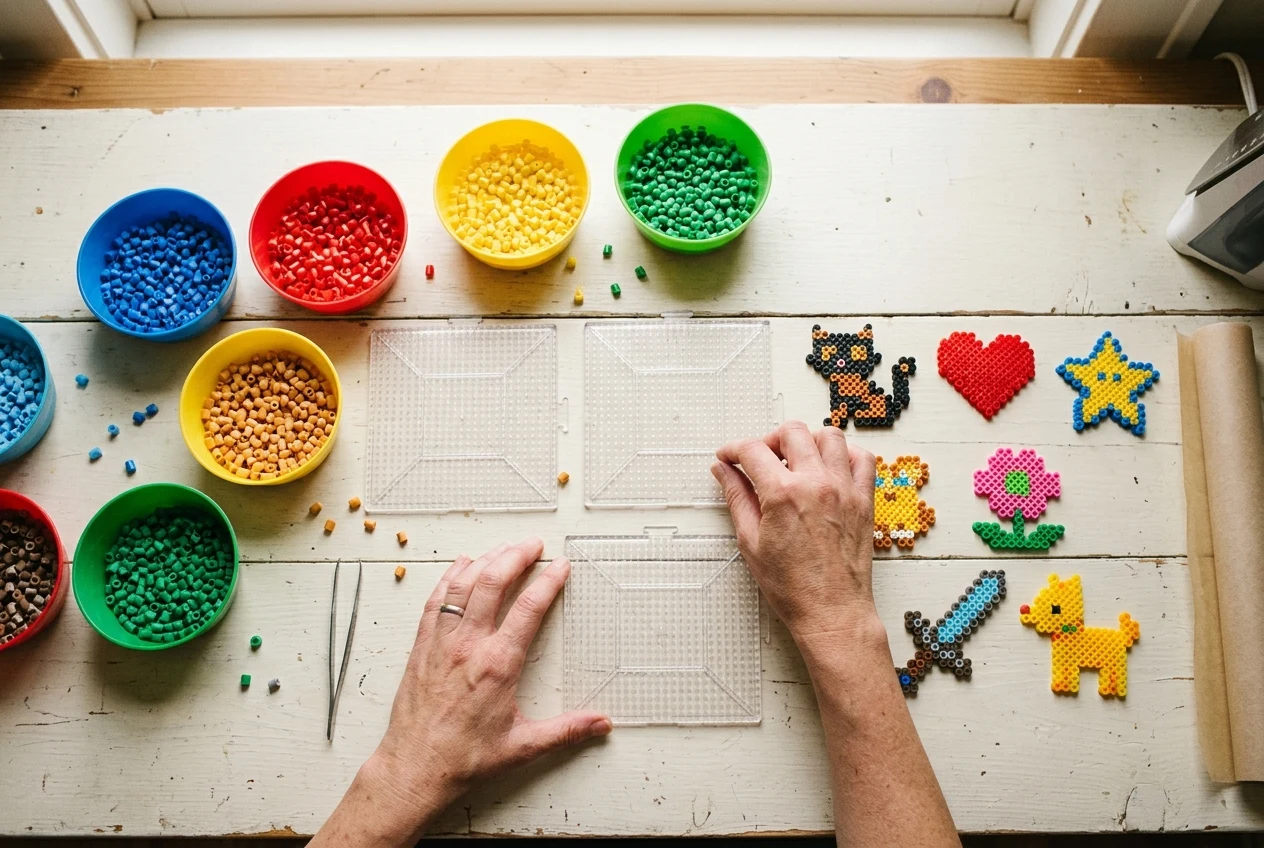
Perler Bead Patterns
Compare other themes if your available colors or boards do not suit the Pokemon you picked.
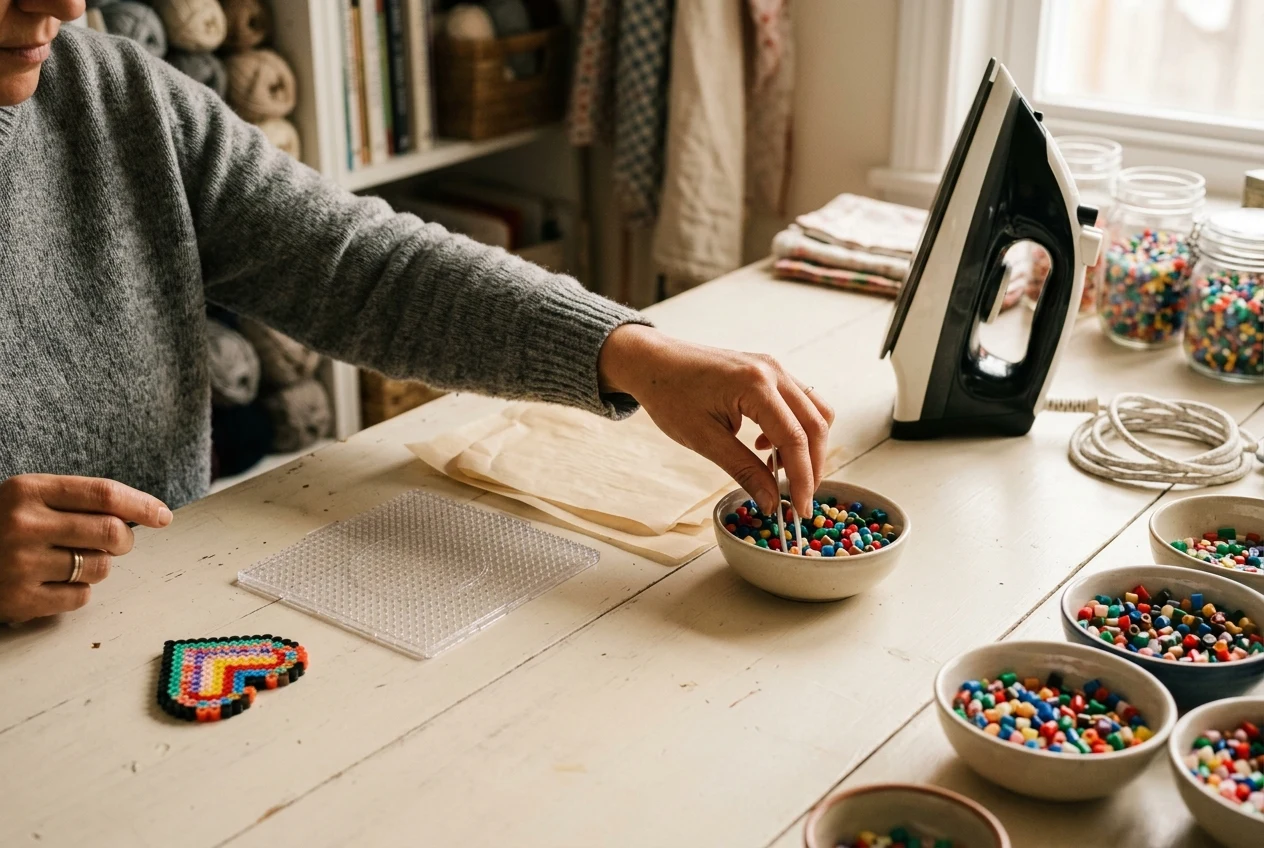
Perler Bead Guides
Prepare to fuse your Pokemon with the guide's advice on ironing paper, medium heat, and cooling between sides.
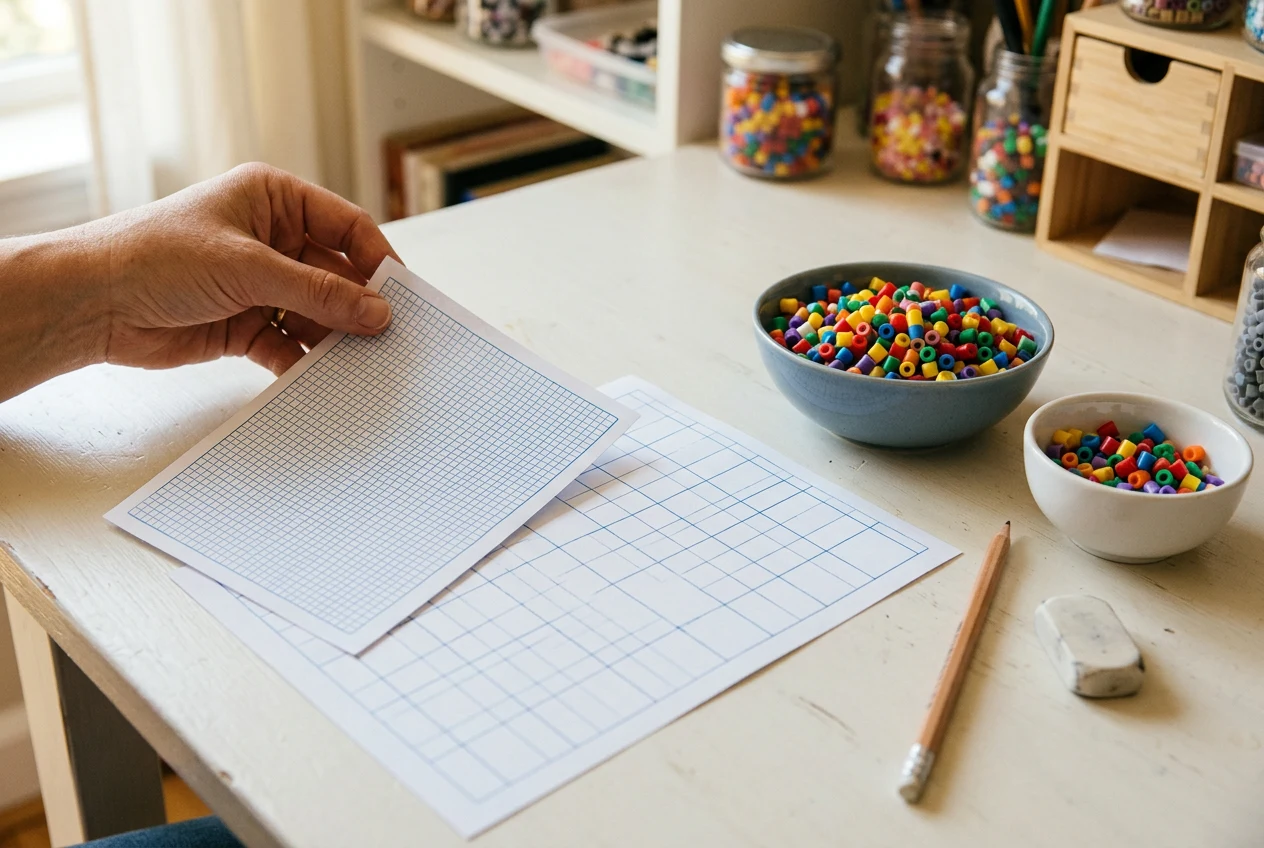
Perler Bead Printables
Draw a Pokemon idea by hand on a 29×29 or 58×58 grid, marking colors as you go.
Plan the colors for your chosen Pokemon.
Load a Pokemon pattern, change individual beads or colors, and download a filled PNG or PDF to follow beside your boards.